VSTBalance Remote Therapeutic Monitoring
Designed the enrollment and compliance flow to enable clinics to bill Medicare for remote care.
Design impact
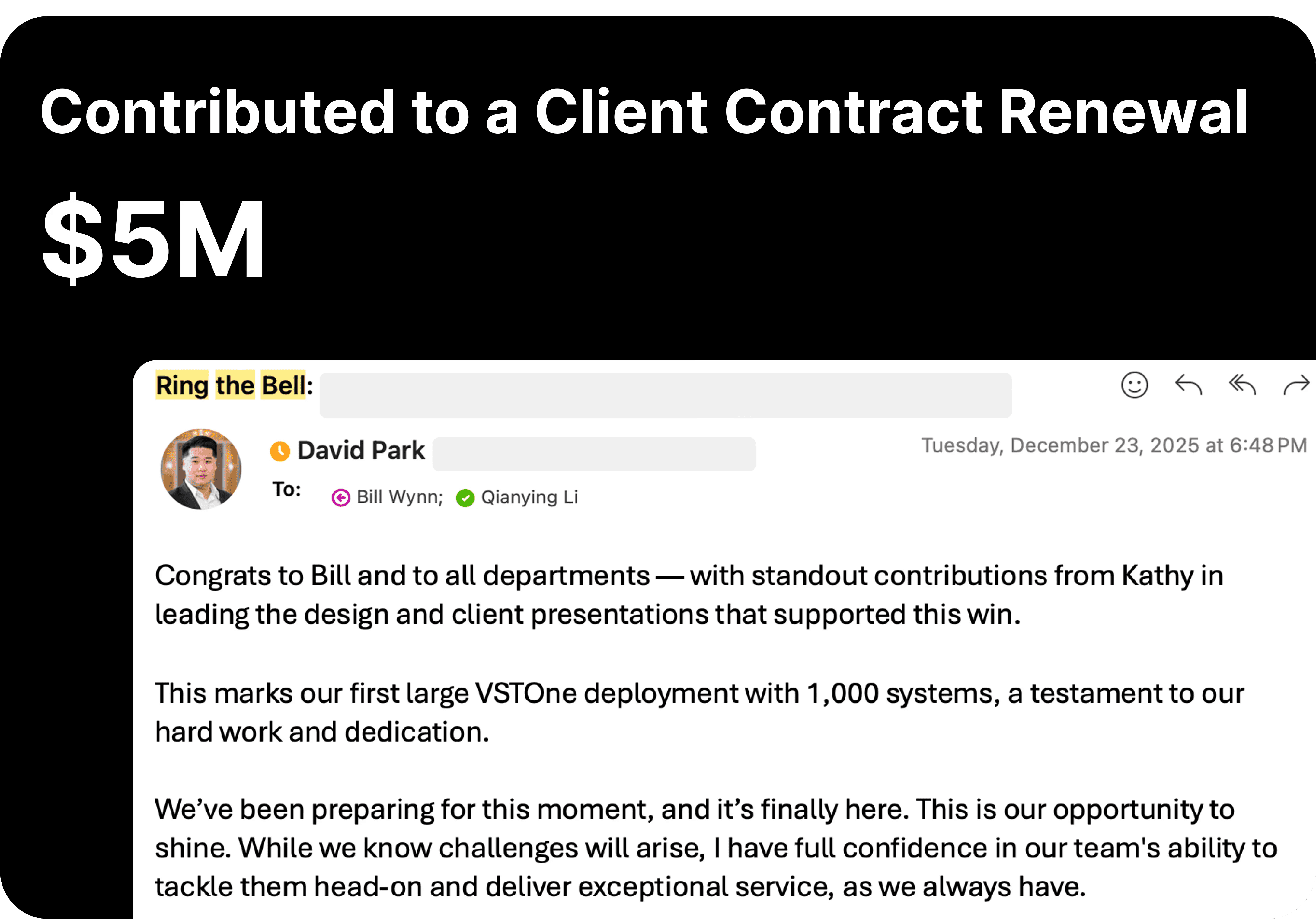
Remote Therapeutic Monitoring lets clinics bill Medicare for monitoring patients between visits, something VST had never built. It opened a brand-new revenue line for the business.
I was the only UX designer on it. Over 4 months I worked out the full flow: how a clinician enrolls a patient, how the care gets monitored, and how all of that becomes something the clinic can bill for.

“We never get asked what makes it easier. It’s always here’s what you’re going to use – adapt to it. Use it the best you can. So this is a whole new world – to get asked to design what we’re actually going to use. It’s just wonderful.”
- Leah, Therapist, Select Rehab
Background
Previous clinical dilemma
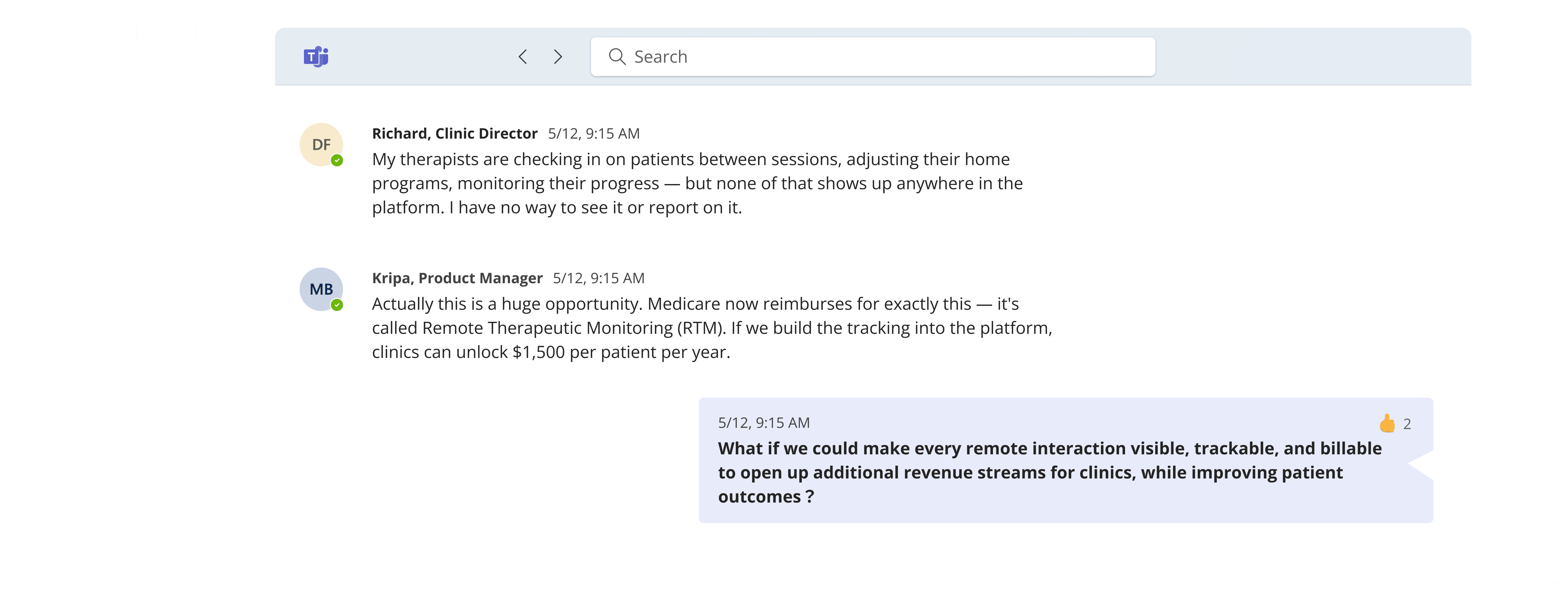
Most of a patient's recovery doesn't happen in the clinic. It happens at home, between appointments, and none of it reached the platform. A clinic director brought it up, and our PM realized what it could be worth. Medicare had just started reimbursing this kind of monitoring, and no one had built the tooling for it yet.
Background
Project scope
VSTBalance has three products: an in-clinic workstation, a patient exercise app, and the Cloud Portal. The first two were separate projects. This case study focuses on the Cloud Portal, where RTM had to be built from scratch with no existing flow.

Research
Design approach
I had about a week to learn what I could about RTM, which was still experimental and barely documented, so I kept the plan tight.


Discover + Quick concepting
RTM was a north star, a new revenue stream the business had never unlocked before. To define the right direction, I brought together a diverse group of stakeholders: CTO, PMs, and engineers with a design sprint. I then created detailed user journeys, three personas based on my insights.
A business priority.

“RTM can’t sync or interface with external EMRs so all RTM data enrollment, adherence, time logs, billing must live inside our platform.”
A technical constraint.
Interviews with current and churned users
I overcame internal constraints to drive the product team's first-ever user interviews which surfaced an unexpected insight: we had a forgotten user persona. I quickly drafted concepts in a day, then used the second round of interviews to gather feedback, reactions, and ideas.

An unexpected persona.

Research shareout to get buy-in
To get team alignment, I presented my research synthesis to leadership. It worked well, and I got the green light to start designing. Annotating with real customer quotes helped align the team to our customer’s pain points and get their buy-in.

Sample slides from my research synthesis.
design opportunities
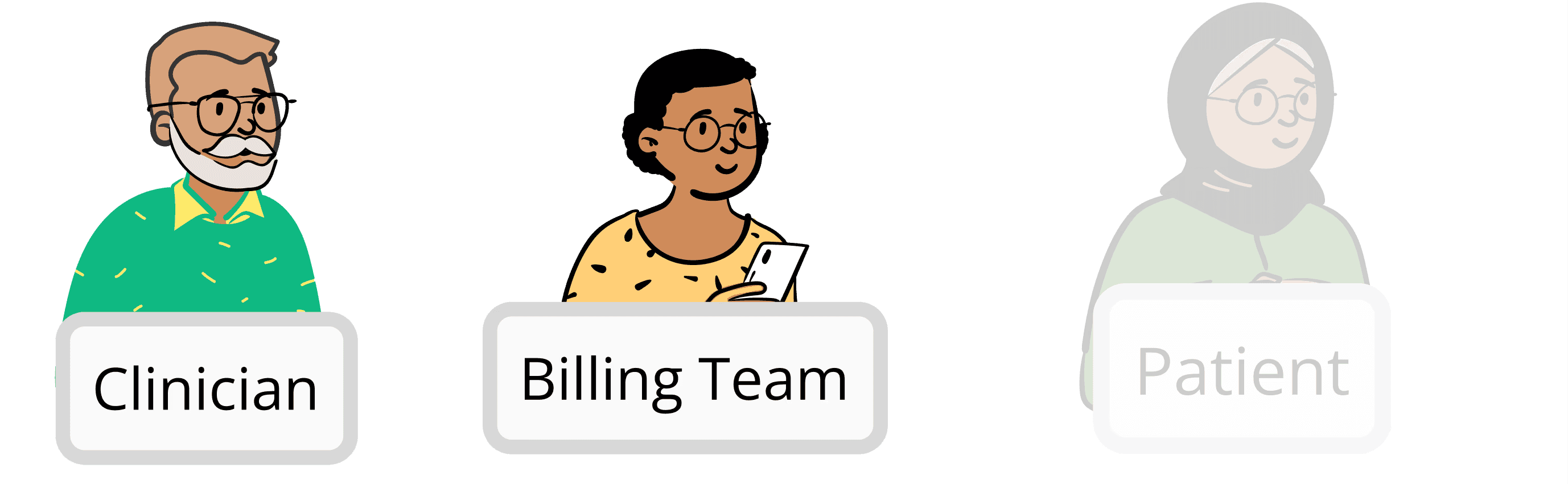
With the directions cleared up, my goal was to design a solution that worked for three groups:
Clinicians could enroll and engage patients in remote care.
Care coordinators could track adherence and catch at-risk patients.
Billing team could bill for that care and submit claims.

Special note from Kathy
For the purpose of the case studies, I provided a bird’s-eye of the process, iterations, and solution. But there’s so much more to explore! If you’re curious about the behind-scene design process, let’s chat - I’d thrilled to share more.
Solution 1
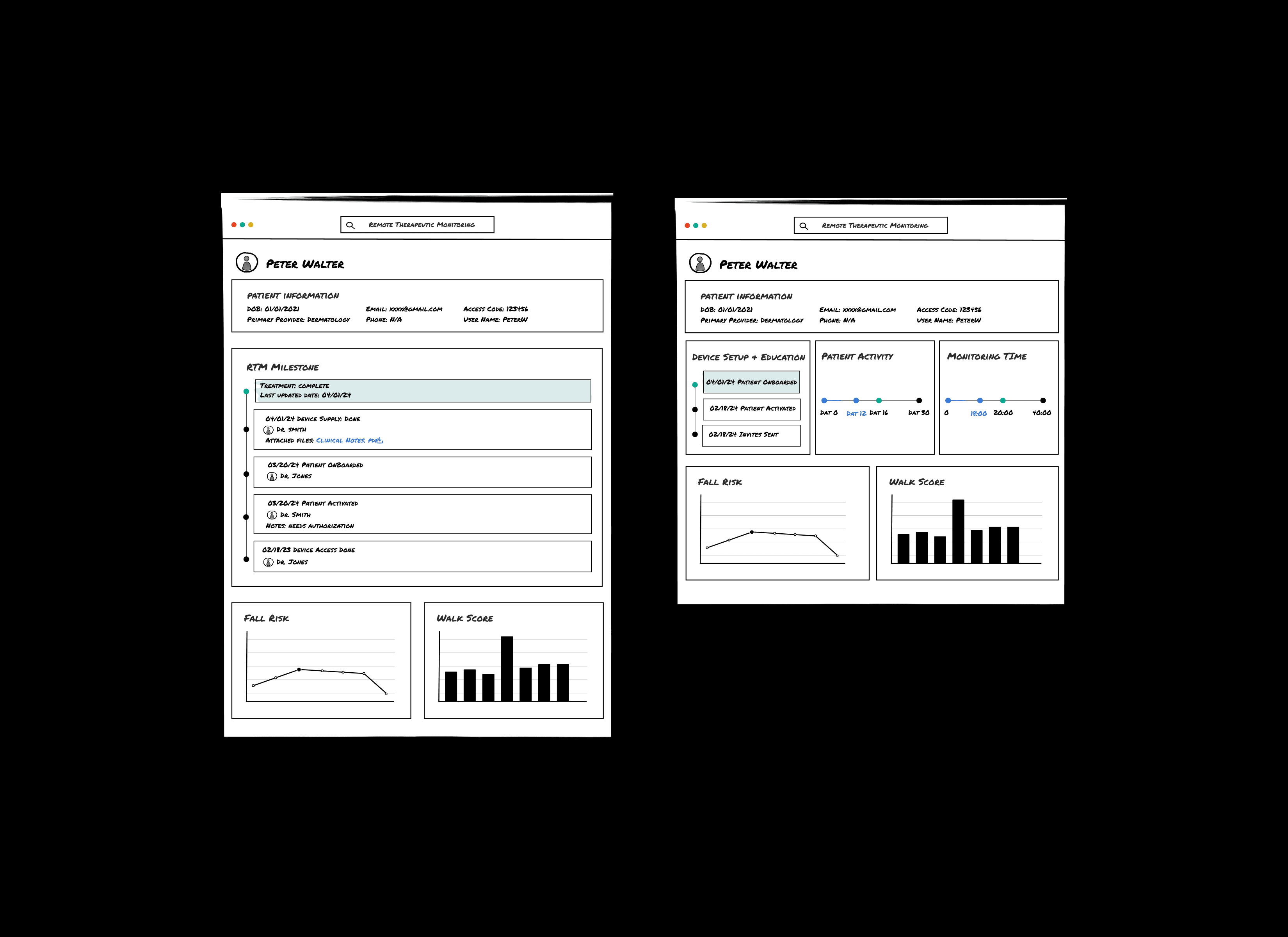
Clinician: Enroll patients to RTM and monitor patients
From research to define the user flow
My PM and I mapped the P0 journeys and edge cases. Enrollment turned out to be an error-prone flow with external dependencies since not all are required at patient account signup:
An exercise program has to be assigned before there's any activity to monitor.
A phone number is needed, even though only email is mandatory to sign up.
SMS permission is required before reminders can go out.

Iterating to find the solution
Final design


Solution 2
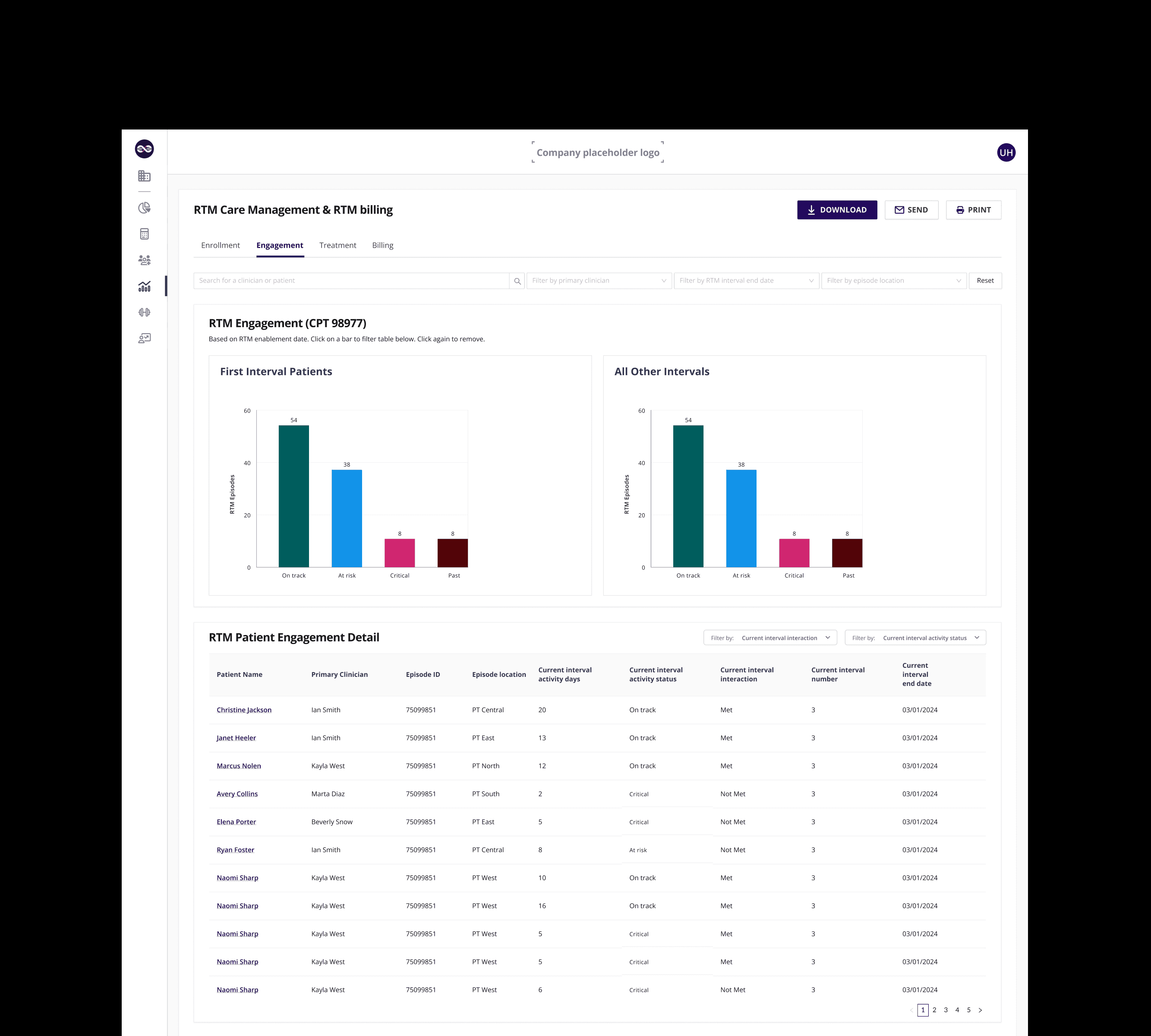
Care coordinator: Monitor patient adherence and identify at-risk patients
An unexpected persona from research: who are care coordinators?
A centralized coordinator who monitors patient adherence and handles digital check-ins across multiple clinics. A single care coordinator typically manages 150–200 patients at a time.
Solution 3
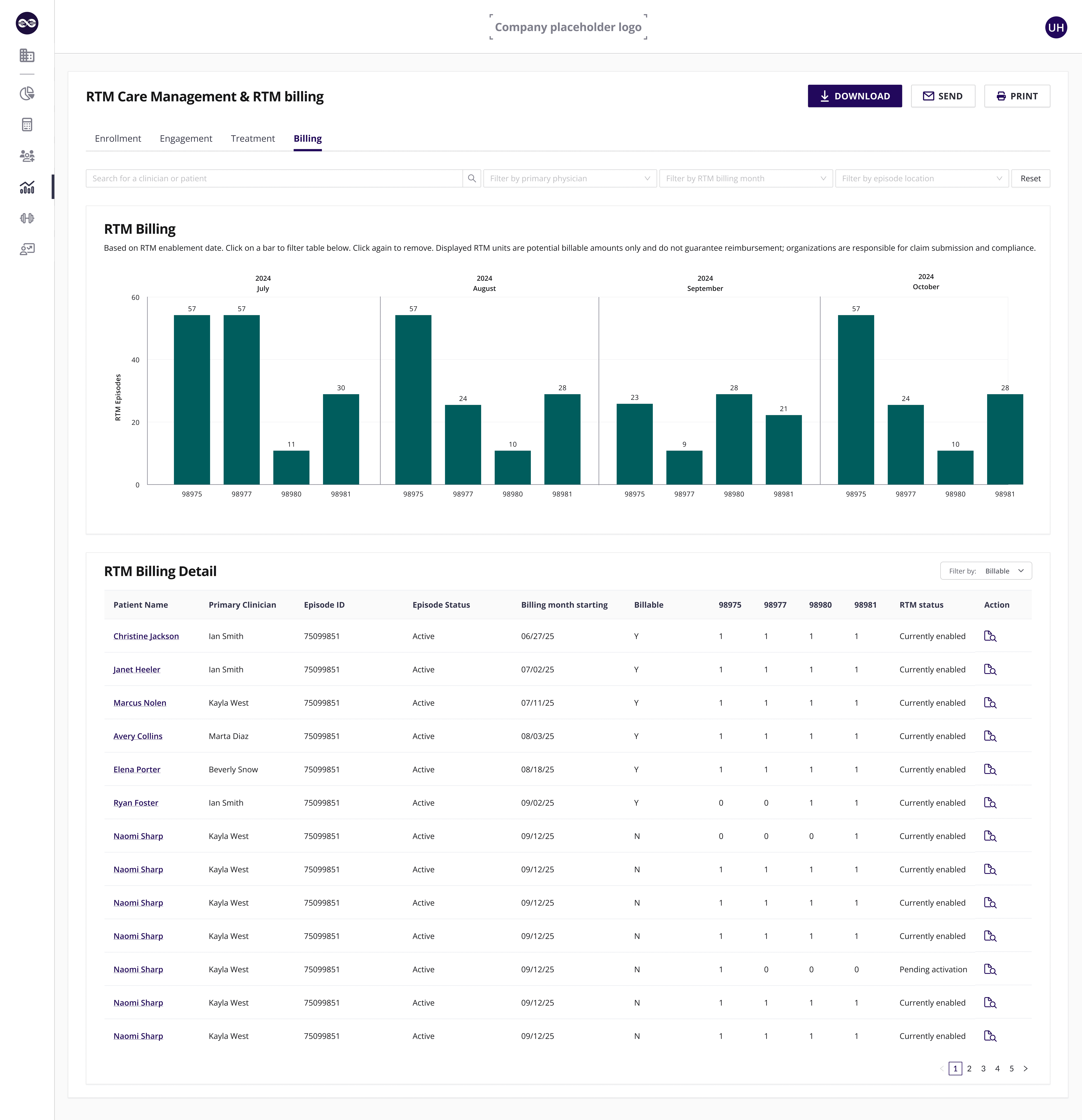
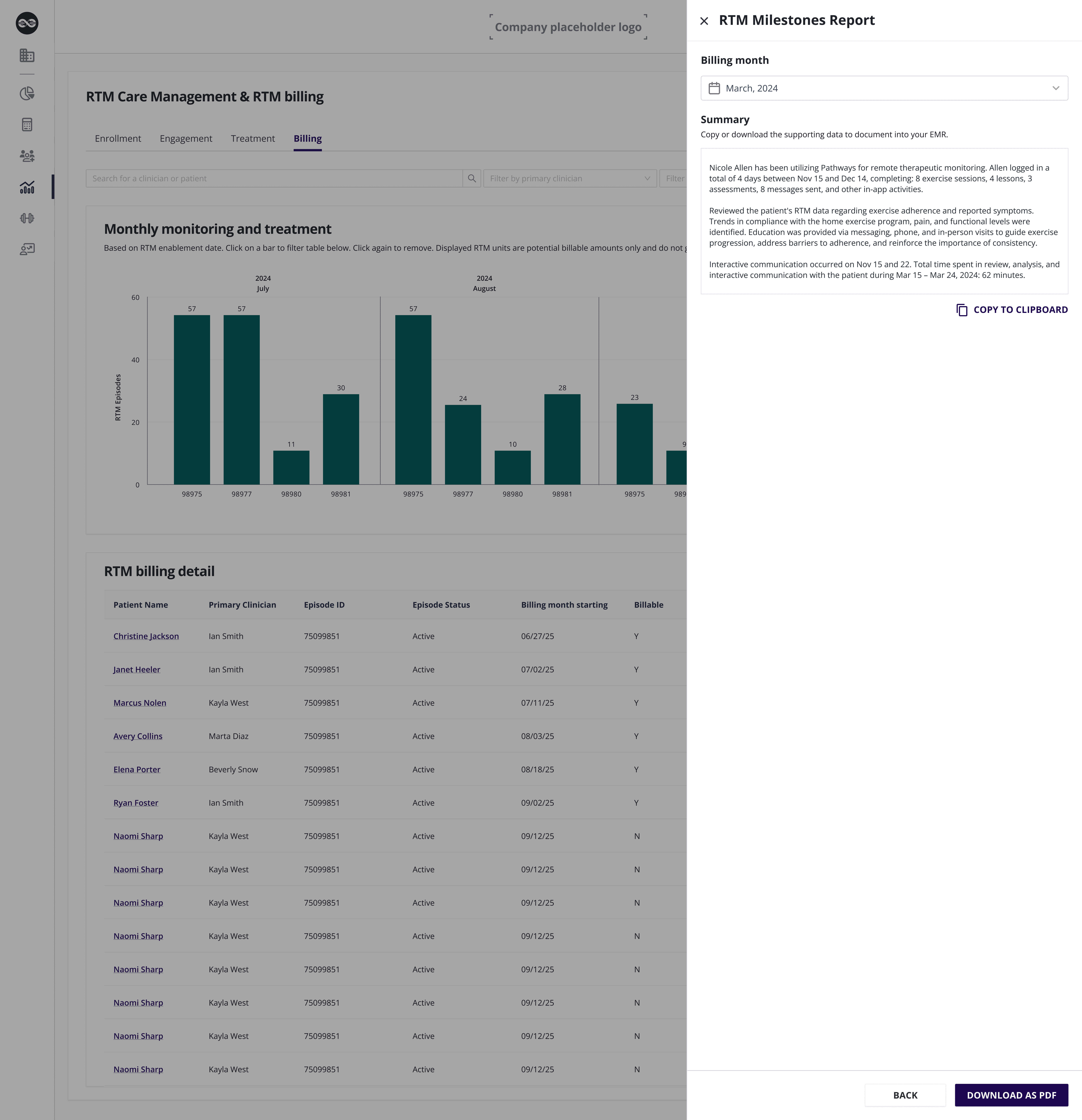
Billing team: Identify billable patients and gather the documentation required to submit claims
Outcome
Final outcome: Shared UX patterns beyond RTM
The patterns we built for RTM didn't stay in RTM. Click-to-filter and hover-to-compare were adopted across other product lines. What began as a billing feature became a foundation for how the entire platform visualizes patient data.
Click-to-filter
This chart-driven filtering pattern became the default interaction for navigating patient data across the platform. Dashboards evolved from static data views into active care management tools.
Hover-to-compare
Hover-to-compare has been validated as a reusable pattern. Help users understand whether patient engagement is on track, improving, or at risk before it affects billing.
Outcome
Pride point
The research almost didn't happen. Nobody on the VSTBalance team had run a user interview before, and I had to push for it more than once. I'm glad I did, because it's what reshaped the whole design.
A reorg also left me as the only designer across in-house and offshore teams, so I ran the meetings, kept them tight, and protected the developers' time, since most of us were in different time zones. I bring engineers in early. On the more technical problems especially, they spot things from an angle I can't, and once they understand the user problem, the ideas just get better.
Outcome
Results
The design rolled out in Q3 2025, and we’ve already started hearing positive feedback in PM/UX roundtables with clients. We’re also using Pendo to continue tracking engagement and behavior.